
Blogs
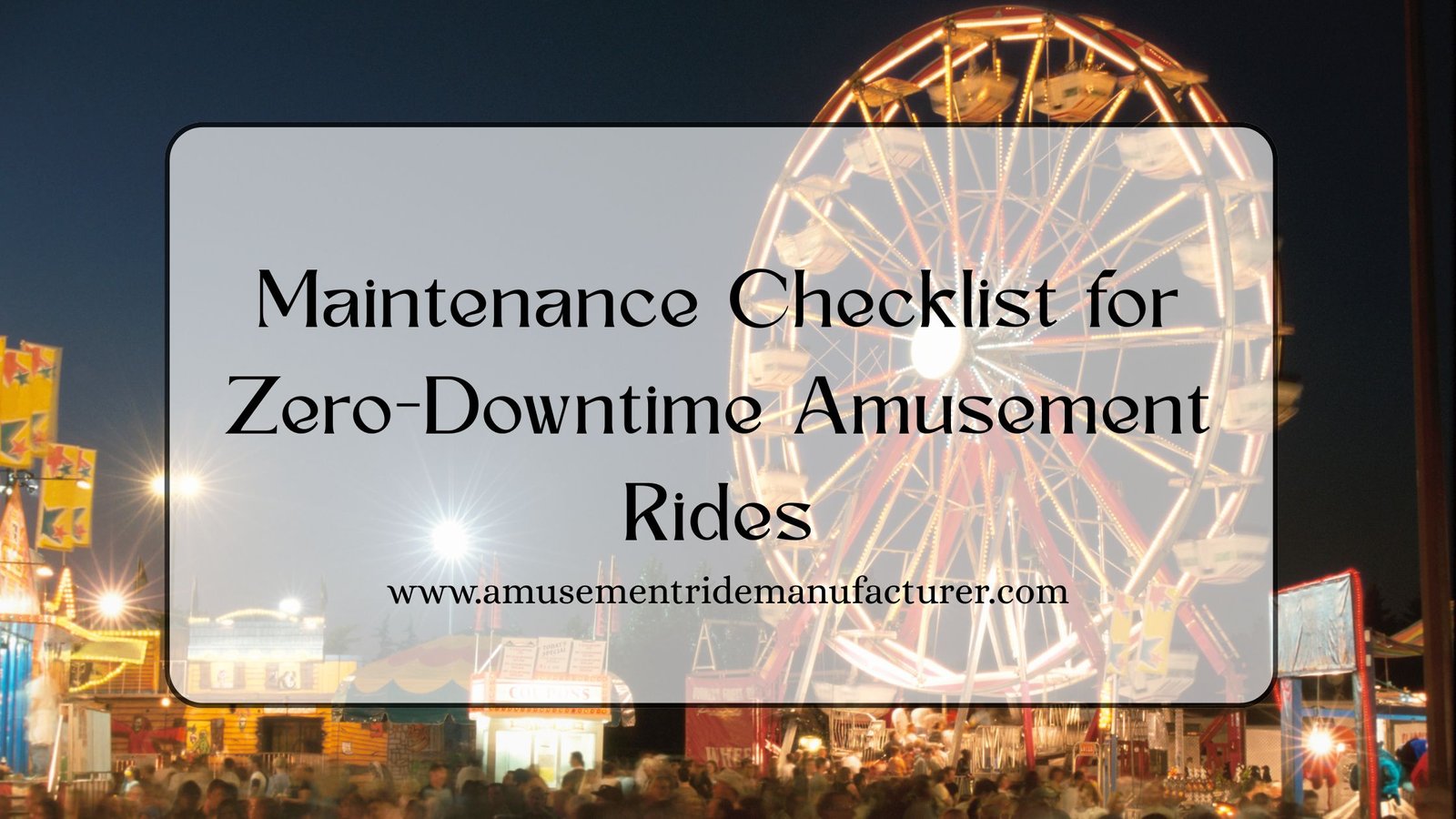
In the amusement business, outages translate to revenue loss, dissatisfied visitors, and risks to the brand’s image. The most sophisticated attractions can also break down if there is no systematic maintenance applied. Parks that come close to zero downtime do not depend on fortune—they depend on systematic preventive maintenance. This manual not only presents an all-encompassing, practical maintenance checklist, but also guides amusement parks, shopping centers and family entertainment centers to operate their rides in a safe, smooth and profitable manner.
Why Zero-Downtime Maintenance Matters
Well-maintained rides deliver:
- Higher ride availability
- Improved guest satisfaction
- Reduced emergency repair costs
- Longer equipment lifespan
- Easier compliance with safety regulations
- Better insurance and audit outcomes
Preventive maintenance always costs less than reactive repairs.
Daily Maintenance Checklist (Before Opening)
These checks prevent most operational issues.
Visual & Structural Checks
- Inspect bolts, nuts, welds, and fasteners
- Check ride tracks, arms, and frames for cracks or deformation
- Ensure safety barriers and fencing are intact
Mechanical Checks
- Verify lubrication levels
- Inspect belts, chains, gears, and bearings
- Check hydraulic and pneumatic lines for leaks
Electrical & Control Checks
- Test emergency stop buttons
- Inspect control panels and wiring
- Confirm sensor alignment and functionality
Rider Safety Checks
- Test restraints, locks, and harnesses
- Verify seat belts and locking indicators
- Check gondola/cabin doors
Tip: Use a signed daily checklist—this protects both guests and management.
Weekly Maintenance Checklist
Weekly inspections focus on wear-and-tear detection.
Mechanical Systems
- Measure wear on moving parts
- Torque-check critical fasteners
- Inspect brakes and stopping distances
Control Systems
- Review PLC logs and fault codes
- Test backup power and UPS systems
- Verify interlocks and redundancy systems
Fluid Systems
- Check oil, grease, and hydraulic fluid quality
- Clean filters and strainers
Monthly Maintenance Checklist
Monthly checks focus on reliability and consistency.
Structural Integrity
- Inspect high-stress load areas
- Perform non-destructive testing (if required)
- Check corrosion protection and paint condition
Electrical Safety
- Inspect grounding and insulation resistance
- Test overload and surge protection devices
- Verify cable routing and protection
Ride Performance
- Monitor vibration and noise levels
- Check smoothness of acceleration and braking
- Validate ride cycle timing
Quarterly / Bi-Annual Maintenance Checklist
These checks reduce long-term failure risks.
Drive & Motion Systems
- Inspect motors, gearboxes, and shafts
- Replace worn seals and bearings
- Re-calibrate motion sensors
Safety Systems
- Test emergency evacuation procedures
- Validate brake redundancy systems
- Review fail-safe operation during power loss
Documentation Review
- Update maintenance logs
- Review spare parts inventory
- Cross-check manufacturer recommendations
Annual Maintenance & Certification Checklist
Annual maintenance ensures legal compliance and ride longevity.
Mandatory Inspections
- Third-party safety inspection
- Load testing and stress analysis
- Electrical safety certification
- Structural audit
Training & SOP Review
- Re-train operators and technicians
- Update emergency response SOPs
- Review incident reports and near-miss data
Spare Parts & Inventory Management
Zero downtime depends on availability.
✔ Maintain critical spare parts on-site
✔ Stock consumables (belts, bearings, sensors)
✔ Track part life cycles
✔ Partner with OEMs for fast replacements
Tip: Identify “single-point failure” components and stock them first.
Use Predictive Maintenance Tools
Modern parks reduce downtime using:
- Vibration sensors
- Temperature monitoring
- PLC fault analytics
- IoT-based condition monitoring
Predictive maintenance detects issues before breakdowns occur.
Staff Discipline & Accountability
Maintenance systems fail without people discipline.
✔ Assign ride-specific maintenance owners
✔ Use signed checklists
✔ Conduct random audits
✔ Encourage early fault reporting
Culture matters as much as checklists.
Common Mistakes That Cause Downtime
- Avoid these pitfalls:
- Skipping lubrication schedules
- Ignoring minor vibrations or noise
- Poor documentation
- Delaying part replacement
- Untrained operators handling faults
Small issues become major shutdowns when ignored.
Benefits of a Zero-Downtime Maintenance Strategy
Parks that follow structured maintenance experience:
- 20–40% fewer ride shutdowns
- Lower annual repair costs
- Higher guest confidence
- Faster regulatory approvals
- Longer ride lifespan
Final Thoughts
Zero downtime isn’t about perfection—it’s about prevention, discipline, and consistency.
A well-maintained amusement ride:
- Runs longer
- Earns more
- Breaks less
- Keeps guests safe and happy
If rides are your revenue engine, maintenance is your insurance policy.